

• Process Space • Finnish Museum of Photography
• Process Space • Finnish Museum of Photography
11.–12.4.2026
Symposium on Artistic Research in Analog Practices
Sustainable Body
The two-day symposium focusing on analog photography and moving image practice will be held in the Process Space at the Finnish Museum of Photography, Helsinki, Finland, during the weekend 11.–12.4.2026. The symposium will also take place on an online platform and streamed to the participants in real time.
The symposium brings together international voices exploring how analog image-making — including still and moving images — shapes contemporary artistic practice. In line with the festival’s focus on embodiment, materiality, and ecological responsibility, the symposium highlights sustainable and ecological darkroom practices and analog processes as forms of resistance to digital acceleration.
Keynote Speaker
We are proud to welcome as our keynote speaker The Sustainable Darkroom. The Sustainable Darkroom is an artist-led, research community that develops low-toxicity chemistries and practices in photography. The project was founded by Hannah Fletcher in 2019, and is now run with Edd Carr, with Alice Cazenave as the research advisor.
-
The Sustainable Darkroom is an artist-run charity. Specialising in research, training and mutual learning, equipping cultural practitioners with new skills and knowledge to develop an eco-friendly photographic practice. We aim for a total transformation of the way photographers work, think, and exist in the living world. Engaged with a present understanding of ecology - the Sustainable Darkroom is one of the most contemporary forms of photography to date.
Taking its form in workshops, talks, symposiums, training sessions, publications and residencies, we are currently leading the movement in challenging the environmental impact and sustainability of photography. From 2021-2022, we operated the world’s first physical darkroom space run on the principles of our movement and between 2021 - 2024 have set up photographic gardens in the UK and USA.
The Sustainable Darkroom has given talks and workshops both online and in person across the world including: The Photographers Gallery, The Royal College of Art, Slade School of Art, University of The Arts London, The Science Gallery Bengaluru, Rochester Institute of Technology, The Photography and Video Show, Centre for Creative Photography of Finland, North East Photography Network, Filmwerkplaats Rotterdam, and Endangered Species Coalition Washington DC.
We have been featured in numerous international publications and podcasts, including Studies In Photography, The Eyes Publishing, The Lissome, Amateur Photographer Magazine, Photoworks Photography+, PhMuseum, Source Magazine and The Photo Ethics Podcast.
We have exhibited works internationally including CHAPPE contemporary art museum, Saatchi Gallery, Create Centre, Woodend Gallery Crescent Arts & Hull International Photography Festival.
More info: https://sustainabledarkroom.com/
Hannah Fletcher – The Keynote of the symposium
I am a visual artist, based in the UK, working predominantly across analogue photography. My practice adapts around materials and environments, weaving photographic knowledge, processes and systems into ecological frameworks. This provides me with avenues through which I can rethink photographic futures that depart from capitalist ideologies. I am the founder of the Sustainable Darkroom, a charity dedicated to researching and disseminating lower-toxicity photographic materials and methods. I also co-direct London Alternative Photography Collective, am represented by Land Art Agency and am a facilitator of sustainability within the arts.
Using a DIY, low-impact, low-waste approach, I expand on photography to think through complex relationships between materials, making and capitalism. The works, often move away from the representational, as I allow the materials or landscape to guide and direct the formation of the image. Letting go of expectations and relinquishing control become part of the rhythm of making.
Incorporating waste from previous projects, I find that the residues and remnants from my photographic practice, often pull me into unchartered territories and new mediums. Such as making paint from my home-made degraded photo-chemistries or sculptures that remediate the silver from my spent photographic fixer.
This approach of photographic expansiveness and fluidity, while simultaneously maintaining careful relationship with materials and place, brings me into deep connection with our ecosystem. It is a process of looking and listening, a process of being perceptive and conscious. It is a slow process, one full of limitations and mistakes. But simultaneously full of continuous learning, gratitude and wonder.
Speakers
We are so happy to welcome the following artists, researchers and artist-researchers to speak in the symposium (in alphabetical order):
-
Bio
Maddie Alexander (They/He) is a trans artist, archivist, and arts worker based in Halifax, NS. He holds a BFA from OCAD University (2016), and an MFA from NSCAD University (2020), where they received The Reznick Family Fund for Student Creativity. Their work has been exhibited locally and internationally, with participation in residencies such as CSAV– Artists' Research Laboratory at Fondazione Antonio Ratti (Como, Italy), and Haystack School of Craft Open Studio (Maine, USA). He was a 2025 AGO x RBC Emerging Artist-Researcher, as well as an Artist in Residence at the SPAO Photographic Arts Centre. His practice has been supported by Arts Nova Scotia, and the Canada Council for the Arts.
Abstract
Long Exposures; traversing HRT and Archival Photography
For the Sustainable Body – Symposium on Artistic Research in Analog Practices, I would like to propose a presentation on my research and artistic practice, directly in relation to the thematic of the symposium. I am a trans artist, arts worker, and archivist. My artistic practice explores lived queer and trans experiences through an autoethnographic approach, blending archival materials and personal records. I blend analogue and digital processes to reflect on the fluid and layered nature of my trans experience, coming together to construct something that feels real and whole.
My current work uses the archival photographic process of sunprinting (Cyanotype and Anthotype) as a medium to explore his research into the historic and ongoing barriers trans folks face in accessing care. I feel a deep kinship between the chemical, time-based nature of sunprinting and the process of HRT (Hormone Replacement Therapy)— both requiring patience, faith, and a sense of magic. Through this, I see my work as an act of reclamation: of narrative, of agency, and of time itself. Using medical ephemera and documentation, this work is deeply informed by my own experiences accessing care as a trans person, in sustaining my own body and its histories through analog photographic processes.
I would like to present a new research based body of work I am embarking on, which brings together different plant species known to support herbal approaches to hormone replacement therapy (HRT). This project, titled A Garden of Our Own reflects how trans communities continue to thrive through mutual care, and knowledge sharing. I will be using the archival eco process of Anthotype printing to create new works which highlight each of these plant species.Through resource gathering and sharing, this project gives audiences the agency to engage with alternative forms of knowledge transmission, and shows trans folks that they are allowed to dream their own futures by planting their own seeds.
-
Bio
Weronika Bela (born 1988, Baerum) and Ivar Hagren (born 1986, Stockholm) are an artist duo based in Stockholm. In their project based practice, they work with the historical conditions of analog photography, its materiality and phenomena.They work with subtle visual worlds and develop associative stories in still images and video essays. They both have a master's degree in fine arts from Konstfack. Hagren/Bela were Iaspis studio fellows in 2022 and received the Hasselblad Foundation's nature photography scholarship in 2024.
Abstract
Silbersee – The Silver Lake
A rumour of silver and toxicity haunts this investigation of a chemically contaminated East German reservoir nicknamed Silbersee (The Silver Lake), near the Wolfen film factory. For years, photographic waste was discharged into the lake - so much so that one could develop photographs directly in its waters.
The name, Silbersee derives from the fact that silver compounds are used in photochemistry and darkroom materials. However, there is neither silver in this body of water nor is it a lake, but rather an abandoned lignite mine – Grube Johannes, a remaining hollow of the opencast mine south of Wolfen into which wastewater from the Wolfen film factory was discharged. Mining pits like this were perfect for the toxic residues from industrial production. A close and convenient disposal option for unwanted byproducts from the manufacturing of photographic materials.
In this project we use photography, video and graphite drawing. The interplay of these mediums raise thoughts about the properties of photography, such as the moment a picture is taken in relation to the time it takes to draw, the mechanical versus the handmade, the unpredictability of the aged photographic material in relation to conscious decisions in drawing, the precision in factory production versus the unpredictability and consequences of emissions in the area. We also make connections between the photographic print and the healing properties of water.
-
Bio
Carla Cardinaletti is a pedagogist (PhD) and research fellow at the Free University of Bolzano (Italy) where she coordinates the transdisciplinary research centre EduSpace MultiLab within the Faculty of Education with a focus on imaginative and embodied education. Her scholarly interests encompass general pedagogy, creative studies, and visual studies. Cardinaletti is also a visual artist specialising in public art, with exhibitions held across Italy and Europe, and has been recognised through international competitions and artist residencies. Since 2023, she has served as the curator for the 00A Centre for Contemporary Photography (Italy). Her academic publications and editorial work in education address themes such as general pedagogy, creativity, and imagination, while her contributions in the arts focus on the philosophy of photography and related artistic practices.
Abstract
Analog Attitude”: a way of life to tackle complexity of present time
This paper endeavours to explore the concept of “Analog Attitude” understood as an aesthetic, epistemic, and existential stance prioritising slowness, care, discernment, and depth of experience. While originating from the realm of photography, Analog Attitude neither insists necessarily on a revival of traditional analogue methods nor sets itself against digital technologies. Instead, it advocates for a modus vivendi which places the body at the centre and values a slow and latent process, demanding attention, presence, passion, and responsibility.
The extended waiting period—characteristic of photochemical processes—serves as a metaphor for cultivating deeper relationship with reality and with others: the analogue image, even before it appears on paper, exists within the sensitivity and imagination of its creator, enhanced by their engagement with the world. Amidst a contemporary landscape marked by digital overproduction and an excess of imagery—both of which threaten to saturate perception, erode memory, and diminish interpersonal relationship—Analog Attitude represents a gesture of cultural resistance and perceptual renewal. Drawing from artistic perspectives, this approach facilitates access to embodied knowledge that produces novel visions, and metaphors.
As such, Analog Attitude stands as an educational and cultural approach, restoring importance to quality of experience and to Kairós qualitative time, encouraging thoughtful reflection, creative exploration, and imagination. It ultimately seeks to promote a more conscious, dialogical, and ethically oriented worldview. The Analog Attitude is actively implemented by the Centre for Contemporary Photography 00A (Italy), which has established it as the foundation of a project conceived in anticipation of the bicentenary of photography’s inception. This initiative constitutes a transdisciplinary endeavour, bridging artistic practice and the social sciences, with the aim of fostering visual literacy and critically engaging with the complexities and challenges introduced by the present time.
-
Bio
Miglė Križinauskaitė is an experimental filmmaker and audio-visual artist from Lithuania, working with analogue media and both moving and still images. Drawing on embodied perception, the poetics of place, and the textures of memory, she explores how the flow of movement, attention, and perception shapes image-making. Artist holds an MA in Film Directing from the Lithuanian Academy of Music and Theatre and is currently pursuing a PhD in practice-based artistic research. Filmmaker has directed seven short films which have screened in numerous festivals, such as 25 FPS Festival, (S8) Mostra de Cinema Periférico, Alchemy Film and Moving Image Festival, Experimental Film Festival Process, Kinoskop – Analog Experimental Film festival, OBSKURA – Analog film festival, and others.
Abstract
Travelogue: Analogue Dreamscapes as an Embodied Method
In this presentation, I introduce Analogue Dreamscapes, my ongoing artistic research practice that explores the travelogue as an embodied, body-centred analogue filmmaking method for navigating inner and outer landscapes. Working primarily with Super 8 mm film, my practice reclaims the travelogue from linear narration, grounding it instead in material sensitivity, bodily attunement, and slow, tactile engagement with place. In this way, analogue processes operate as a sustainable, body-aware counterpoint to digital acceleration.
Through film excerpts from Impetus (2022), Blue Mountain. White Cloud (2024), and Does the Sea Have a Heart?(2025), I approach the travelogue not as a linear journey, but as a liminal, dream-like condition—a state in which geography, memory, body, and imagination intersect. Influenced by psychogeography and autoethnographic approaches, I understand the dreamscape as both subject and method: a way of sensing, recording, and composing experience through the body, beyond narrative logic.
The presentation draws from my ongoing practice-based PhD research, Travelogue as Dreamscape: An Experimental Analogue Film Practice. I unfold my working process from walking, drifting, and field recording to filming, hand-processing, and assembling analogue material. I work predominantly with Kodak Ektachrome reversal film and usually project directly from the positive original, allowing the filmstrip itself to function as both source and final object. In this context, projection becomes a performative, bodily act, where light passes through the material trace of experience without digital mediation.
Particular attention is given to the role of failure, chance, and bodily vulnerability within analogue workflows— including moments of shouting, calling out, or vocal presence during filming—as gestures that inscribe the body directly into the image and soundscape. Slowness, material resistance, and the limits of analogue processes are understood not as constraints, but as conditions that shape attention, care, and meaning-making.Situated between artist presentation and research reflection, this presentation invites the audience to consider analogue film not only as an aesthetic choice, but as a way of thinking-with the world—where filmmaking becomes a bodily practice, travel an inner crossing, and the body itself a living, sensitive archive.
-
Bio
Maria McSweeney is an Irish lens-based visual artist. Her practice focuses on exploring place through deep mapping and documenting diverse landscapes. She is currently captivated by underwater aquatic spaces and overwater landscapes that hold unique ecologies and ecosystems. Her work traverses these underrepresented spaces, examining the dynamic rhythms and interactions within them.
Using snorkeling and scuba diving as methods of exploration, she approaches these areas through an ecological, care-based, and hydrofeminist lens. Working with analogue processes, she experiments with sustainable and ecological alternatives to mainstream darkroom practices. Her practice asks how site-specific, analogue, scientific, and ecological lens-based methods can become acts of care within the Anthropocene.
Recent achievements: The Loughshinny Boathouse Studio Award (2025), UCC Creative Workshops with Climate Scientists (2025), IMMA Perspectives Residency (2025), IMMA Earth Rising (2024), Leitrim Sculpture Centre Exhibition Residency (2023), The Darkroom Dublin Super 8 Residency (2023), The Aran Island Underwater Photography Project (2023).
Abstract
Presentation of the ecological photography projects: The Bullock Harbour Unscientific Photo Lab and Bike Lab Installation
I would like to present on an sustainable analogue photography project I completed last year while undertaking my postgrad diploma in Art and Ecology at the National College of Art and Design in Ireland.
The Bullock Harbour Unscientific Photo Lab was a travelling, performative, and playful scientific darkroom established at the Trident Scuba Aqua Clubhouse in Bullock Harbour, South Dublin, from March to June 2025. I wanted to slow down and spend sustained time with the seaweeds of the harbour, approaching them with care based methodologies and to observe and learn from these often-overlooked marine plants.
I wanted to explore ecological alternatives to conventional darkroom processes while I was documenting the seaweeds and the harbour itself. I developed 35mm film using a seaweed based sustainable film developer and I also created lumen prints, a cameraless process using sunlight and saltwater. The lumen process mirrored the environmental conditions necessary for seaweed growth, salt water and sunlight.
By working outside, I was challenging the extractive, chemically intensive nature of traditional darkrooms, which are often disconnected from the environments they depict; instead adopting a more caring, ecological way of creating analogue photographic representations of landscape both above and below the water, on the harbour itself. I travelled to the harbour by bicycle, completing a 30km round trip from Dublin’s inner city, deepening my connection to both places and reinforcing the embodied transition between them.
This work evolved into the installation Bike Lab, a mobile darkroom carried on my bicycle, accompanied by a lab book documenting experiments, conversations, and observations I experienced while at the harbour. Drawing on theories of eco-phenomenology, radical pedagogies and the Carrier Bag Theory of Fiction, Bike Lab questions how the ways we move through and create in the world might become more intentional, caring, and responsive to the places and communities, both human and non human, we inhabit and engage with. -
Bio
Pilvari "Nosfe" Pirtola is a bearded anarchist, demoscene-activist, artist, researcher and noise musician. Currently living in Somero, Finland. Graduated MFA & BFA from Finnish Academy of Fine Arts in 2008. He has been working on a Doctor of Fine Arts degree at Academy of Fine Arts at the University of Arts Helsinki since 2015. He’s had exhibitions in galleries and museums, performed extensively around Europe and his works have been shown at many festivals. As a multidisciplinary artist his works can be anything from paintings to algorithmic computer pieces. Mostly in his works are present noise-aesthetics and radical politics. Besides solo work he also works as a part of different artist groups and collectives, for example Speech Karaoke Action Group, mfx, flo, iSO, AateKorjaamo and Lutkajumala. Nosfe has been working with experimental movies on film since 2004, doing works on on s8, 16mm and 35mm formats.
Abstract
Analog fractals - self-formed Sierpiński triangles on movie film
Analog fractals 1 & 2 are movies made from a roll of film that has self-formed Sierpiński fractal triangles. They are different scans of the same roll of film, showing the movie first after b/w developing and then after c41 developer.
In April 2025 I developed a roll of Fujichrome R25 Single8 film and found that the entire roll had unique triangle patterns. Prior to shooting and developing the film, the cartridge was exposed to extreme environmental conditions for years and it seems that these conditions caused a cellular automata type mechanism to create patterns in the top color layer of the film.
So far I have not found any documentation of similar processes happening in photographic film before, while there are examples of this happening in nature and scientific experiments on different materials. While the process is slow and time consuming to replicate it seems like a new possible method of creating images on certain type of photographic film.
The artistic presentation will include the screening of the films and overview of research done on the film so far.
-
Bio
With an academic background in Philosophy, Joana Quiroga became a visual artist to approximate the discussions to everyday life. At the moment her main research is about how it is possible to reflect on power relationships through bread and wheat, asking how they may unravel our (western) way of thinking and its effects in our body consistencies. Using a wide range of media, Joana has participated in exhibitions, projects and residencies in Germany, Serbia, Bosnia Herzegovina, France and Romania. In 2025 she began a PhD in Art Research at University of Arts Helsinki.
Abstract
8mm tapes, slides, and an old analogue family album: exploring autoethography as a philosophical and artistic method.
A picture of a little white kid eating crackers covered with sand on a beach in Brazil. What can it say about human power dynamics?
My proposal is based on my current PhD research at the University of Arts Helsinki, in which I will go through personal archives to elaborate on its main topic: how we can deeper understand power relations through what we eat. Specially focused on our worldwide spread habit of eating wheat products, I will follow this plant in different ways, specially paying attention in the context where I come from, Brazil. There, our daily bread is a (ongoing) consequence of colonization. Wheat opened something yet unknown for the so far nomad humans: domestication. Could this have shaped not only our bodies, but also our mindsets?
At the symposium I want to share some ideas about how I plan to use personal archives in this PhD research: as we attest that wheat has shaped our bodies and mindsets, another essential layer of my research is to reflect on how Art, Philosophy (my original academic background) and westerns approaches in general, may incorporate and reproduce similar process of domestication.
As a map to unravel this enigma, I offer my own: entangling personal archives with the findings on the research, I plan to create, using autoethnography inspired methods, a short film where I unfold my (problematic) position as a philosopher and artist, to expose the myriad of issues involving wheat, and the possible parallels with the role of art, hopefully opening our eyes about how we can reproduce those processes of domestication, hopefully opening new ways to understand ourselves. I will illustrate my presentation with some already found images, connecting some theoretical basis, philosophical inquiries, but also the material and practical challenges in dealing with (a not so well cared) family archives.
-
Bio
Stockholm-based artist, MFA Fine Art, HDK-Valand Academy, University of Gothenburg. My ongoing artist film project, Discovery in Silence (DiS, 2022–), interrogates decades of Super-8 films to examine an history of bulimia nervosa affecting three generations of women in my family. Structured as an evolving artistic research in 34 chapters, each chapter marks a moment of discovery. Individual films, screenings, discussions, and workshops function as conceptual gateways within the project’s broader development. Methodological questions include: how can bulimia function as an artistic method, and address how to life write for the screen? My concept, bulimic filmmaking, is accepted for publication at the ‘Journal of Feminist Art and Research’. I received awards to research the films and writings of Anne Charlotte Robertson held at Harvard, and works by Sarah Pucill and Sandra Lahire in London.
Abstract
Bulimic filmmaking as a feminist artistic methodology
This symposium proposes bulimic filmmaking as a feminist artistic methodology emerging from DiS. Through a screening of excerpts of DiS latest chapters of How Would You Like Your Bulimic Film Served? I examine how bulimia nervosa can function not only as subject matter but as a structuring principle within experimental film practice. Rather than representing eating disorders through psychological explanation or narrative resolution, bulimic filmmaking approaches bulimia as form. Repetition, rupture, concealment, excess, rehearsal, and obsessive self-observation become compositional strategies shaping image, sound, editing, and duration.
The disorder is not illustrated; it informs the film’s temporality and material logic from within. How Would You Like Your Bulimic Film Served? experimental short film serie comprising chapters 32: Rare, 33: Medium, and 34: Well Done of DiS. These filmic chapters were created by using bulimic filmmaking. Filmed without a predetermined structure, instead responding to the embodied experience of bulimia. Camera was directed toward spaces of a bulimic episode, while sound recordings captured both lived experience and reflection. The process of filming, editing, and sound recording involved live reflection, superimposition, re-editing, and re-authoring, deliberately exposing explicit content and reliving provoked episodes.
These strategies ensure that the films are not only representational but also enact the disorder’s temporal, psychological, and affective dimensions. The symposium will situate bulimic filmmaking within feminist experimental film traditions that engage the body as both material and site of knowledge. Also address the ethics of working with intergenerational archives shaped by stigma and silence, asking how a method grounded in a disorder can challenge dominant visual regimes that demand coherence, productivity, and linear recovery narratives. By articulating bulimia as method rather than metaphor, this presentation argues for an expanded understanding of how embodied conditions can generate formal innovation in contemporary art. Bulimic filmmaking proposes that artistic research can operate through vulnerability, compulsion, and repetition—transforming stigmatised experience into critical cinematic strategy.
-
Bio
Jorden Senior is a Helsinki-based photographic artist working across multiple disciplines, including analogue and experimental printing—lith, mordançage, chromoskedasic sabattier. His photographic practice explores how material processes shape image-making. Additionally, he leads a research team at VTT Technical Research Centre of Finland; this scientific training informs his approach to darkroom questions, looking for data where claims are made. His sustainability research forms the basis for a forthcoming publication, Silver and Water: Sustainable Darkroom Practices.
Abstract
Silver and Water: Materiality, Bodies, and What Sustainability Actually Means in the Darkroom
Sustainability in analogue photography is ultimately about bodies—the water bodies that receive our effluent, the practitioner’s body handling chemistry, the material body of silver and gelatin that constitutes the photograph itself. Yet much of the sustainability discourse focuses narrowly on developer choice: caffenol versus Rodinal, botanical alternatives, “organic” chemistry. Through my own practice in analogue photographic printing, I began to question whether this focus reflects the actual material relationships at stake.
This presentation shares findings from a practice-led investigation that draws on the underlying chemistry and physics of darkroom processes, alongside published ecotoxicology data. I examined standard workflows (B&W film and print, C-41, RA-4) and experimental techniques (including lith printing, mordançage, and chromoskedasic sabattier) to understand where environmental concern should actually concentrate—and where the discourse may be misdirected.
The results were sometimes surprising. Some processes have better environmental profiles than their reputation suggests; others cannot be made sustainable—only less harmful. The slow, embodied work of understanding materials deeply offers something that quick “green” marketing claims cannot: honest accounting of what our practice actually releases into the world, and practical interventions ranked by effectiveness.
I will bring prints demonstrating the processes discussed—lith, mordançage, chromoskedasic sabattier—as material evidence of the practice that prompted these questions. Full research documented at jordensenior.com.
-
Bio
is a Belgian visual artist working at the intersection of analog photography, plant-based processes, and archival research. Her practice brings together historical images, family archives, and the landscapes from which they emerged. By harvesting local plants and transforming their pigments into light-sensitive emulsions, she allows place to re-enter the photographic process.
Working primarily with anthotypes, chlorophyll prints, plant developer and other experimental techniques, Sieborgs approaches photography as a living, time-based medium. It is shaped by sunlight, flora, exposure to the elements, and time. Her projects explore how memory can be reactivated through material encounter and how images might remain open, vulnerable, and responsive to their environment. She is currently based in Brittany (FR) as an artist in residence, developing Kalon Kozh, a landscape-driven project that further investigates the embodied relationship between land, time, and image-making.
Abstract
The Terroir of Photographic Body
This presentation proposes terroir as a way to rethink the photographic body. Borrowed from agricultural discourse, terroir describes the complex interaction between soil, climate, plant life, and time. In my practice, I extend this concept to analog photography by developing archival images through plant-based processes using vegetation gathered from specific sites. Working with anthotypes, plant developers, and chlorophyll printing, I collect plants from the landscapes depicted in the photographic archive material whenever possible. The plants are not neutral pigments: their chemical structure, seasonal condition, and ecological status actively shape the image. In this way, the photograph becomes inseparable from the territory in which it is re-materialized. The land does not only appear in the image: it physically (re)constitutes it.
The source images often stem from vernacular archives: family photographs or found (glass) negatives detached from their original environments. By re-developing them through locally harvested plants, the work re-roots the archive in contemporary soil. Multiple temporalities intersect within a single image: the historical moment of exposure, the seasonal cycle of plant growth, the duration of sun-based development, and the gradual fading of organic pigments. Through these processes, the photograph is approached as a living, vulnerable body shaped by place. Instability, fading, and fragility are not technical flaws but ecological conditions. Sustainability, fragility, and temporality are not only material parameters of the process, but constitute a relational methodology that recognizes land, climate, and vegetal agency as active co-authors of the image. The presentation will include visual case studies and reflections on how site-specific plant processes can transform the archive into a situated, embodied, and time-sensitive photographic practice.
-
Bio
Leanne Wiggers (b.1996) is a Dutch artist working across photography, video, and installation. Her practice explores relationships between landscape, ecology, and image-making, focusing on the essence of photography as material and embodied engagement with the non-human world. Working through site-specific methodologies, she uses sustainable processes and close observation of landscape as both subject and collaborator. Her research investigates light as a condition of life, drawing connections between photography, photosynthesis, and ecological systems. This formed the basis of her solo exhibition research exploring photography and light in relation to plant life and material processes. Since 2021, she has also explored breath as a shared condition between human and non-human bodies, examining atmosphere, vulnerability, and interdependence. She is currently a Photography Technician at the Royal Academy of Art, The Hague (KABK), where she researches and develops sustainable darkroom and printing techniques alongside her theoretical research into landscape, materiality, and photographic history.
Abstract
Developing the Site: Plant-Based Chemistry and the Reconfiguration of Landscape Photography
My practice has long examined the relationship between photography, ecology, and the conditions that make life visible, light, photosynthesis, and material exchange. Through site-specific methodologies, I investigate how landscape photography might move beyond representation toward forms of ecological participation.
Photography has historically been tied to systems of extraction, from silver mining to industrial chemical production, and to modes of framing land as survey, archive, and document. Even critical shifts such as the 1975 New Topographics exhibition, while altering the subject of landscape, remained materially grounded in industrial photographic chemistry.
Therefore this presentation asks: How might site-responsive plant developers reconfigure both the material and epistemological foundations of landscape photography? Rather than substituting industrial chemistry with generic ‘natural’ alternatives, the research develops photographic processes from plants that are ecologically, historically, or economically embedded in specific locations. Experiments include pine needles collected at a residency at Joya: arte + ecología (Spain), bladderwrack seaweed gathered along the Medway and Rochester riverbanks, a species ecologically significant to the area, and ongoing investigations in the Netherlands using rosemary, mint, and other plants as exploratory bases for testing plant-based recipes.
The project Sussurus serves as a central case study. Returning to a village where rice cultivation forms the primary livelihood, I am developing a rice-based photographic developer that engages directly with the site’s agricultural and ecological conditions. Here, the plant is not symbolic but materially embedded in the landscape’s lived reality. By allowing locally significant plant matter to participate chemically in image formation, the work shifts photography from a detached representational practice toward a form of ecological and material exchange. The darkroom becomes a site of negotiation between land, labour, and light. In foregrounding instability, duration, and site-derived chemistry, the research proposes landscape photography not as fixed archive, but as a situated, embodied process shaped by the very ecologies it depicts.
-
Bio
Lexy is an artist and researcher, based at Fotoverkstedet, an artist-run darkroom in Bergen. She specializes in analogue photographic techniques, working with textiles, artist’s books, and durational images, viewing photography as a form of performance and action that extends beyond the content of the image. She is interested in iterative patterns, durational performance, materiality, exploring how time, perception, and repetition can produce a form of visibility and aesthetic experience. She approaches her investigations philosophically, aiming to build a coherent, interconnected, and poetic theoretical framework through her work.
Lexy has developed a craft technique, Silver Mirroring Toning, which restores reflective silver to the surface of silver gelatin materials. This process transforms silver mirroring from a type of photographic degradation into an iridescent effect and aesthetic experience. Her work is included in the permanent collection of Bergen Kommune and has been exhibited widely in Norway and internationally.
Abstract
The presentation will focus on silver mirroring, a rarely discussed form of photographic chemical degradation found on B&W photographs, and introduce Silver Mirroring Toning, a rarely taught process that intentionally activates this phenomenon. Through this technique, what is traditionally considered as photographic deterioration is transformed into a colourful metallic effect, an aesthetic possibility, and a conceptual resource. The presentation will be structured in four parts: 1. What silver mirroring is and how it is formed? 2. How I began exploring silver mirroring? 3, What Silver Mirroring Toning is and how it works? 4. References and possible future developments.
-
Bio
Müge Yildiz is an artist-filmmaker and doctoral researcher based in Finland. She is pursuing her PhD at Aalto University, Department of Art and Media, supported by a Finnish Cultural Foundation Grant. She holds an MA in Visual Cultures, Curating, and Contemporary Art from Aalto University, where she was awarded the Finland Scholarship, and a BA in Cinema and Philosophy from Galatasaray University, Istanbul, with additional studies at Paris 3 Sorbonne Nouvelle.
Her practice explores experimental and eco-analogue filmmaking through hybrid analogue –digital techniques and collaborations with non-human agents. Working primarily with 8mm, Super 8, 16mm, and 35mm film and archival materials, she develops intuitive, research-based methods that involve micro organisms such as yeast and bacteria. Her doctoral research investigates bio-based cellulose film, sustainable filmmaking practices, and expanded notions of authorship beyond the human. Her work has been presented internationally at festivals and institutions, including the BFI London Film Festival, the Images Festival Toronto, Anthology Film Archives, the Oberhausen Film Seminar, and the Istanbul Biennial Production and Research Program.
Abstract
When Film Grows: Interspecies Image-Making
My artistic research explores experimental and eco-analogue filmmaking as a practice of shared creation between human and more-than-human agents. Working across analogue film, biomaterials, and living systems, my research asks how cinema can function as a site of ecological encounter, care, and co-authorship rather than a tool of representation or narrative control.
My practice is grounded in Practice-as-Research methodologies and draws on experimental cinema, ethology, posthuman theory, and ecological frameworks. Across multiple projects, I work with living organisms, such as bacteria, yeast, slime mold, cyanobacteria, mycelium, seaweed, as well as bio-based materials, including bacterial cellulose, bioplastics, and micro- and nanocellulose. These materials actively participate in the image-making process, shaping cinematic form through growth, decay, movement, and temporal duration.
Rather than scripting fiction in advance, I create experimental conditions in which images emerge through material behaviour and interspecies interaction. This approach rethinks authorship, narrative, and sustainability in analogue filmmaking, positioning cinema as a living system that evolves through care, attention, and responsiveness. My research also examines the fragility and ephemerality of bio-based images, raising questions around preservation, archives, and the politics of material longevity.
In this presentation, I will introduce key projects from my research, including Non/Living, biomaterial film experiments, seaweed-based moving-image studies, and my ongoing 16mm project Living Cinema. Through visual examples and process documentation, I will discuss how experimental fiction can emerge from ecological collaboration and how analogue film practices can be reimagined within contemporary climate and biodiversity discourses.
Practical Information
What: Sustainable Body – Symposium on Artistic Research in Analog Practices
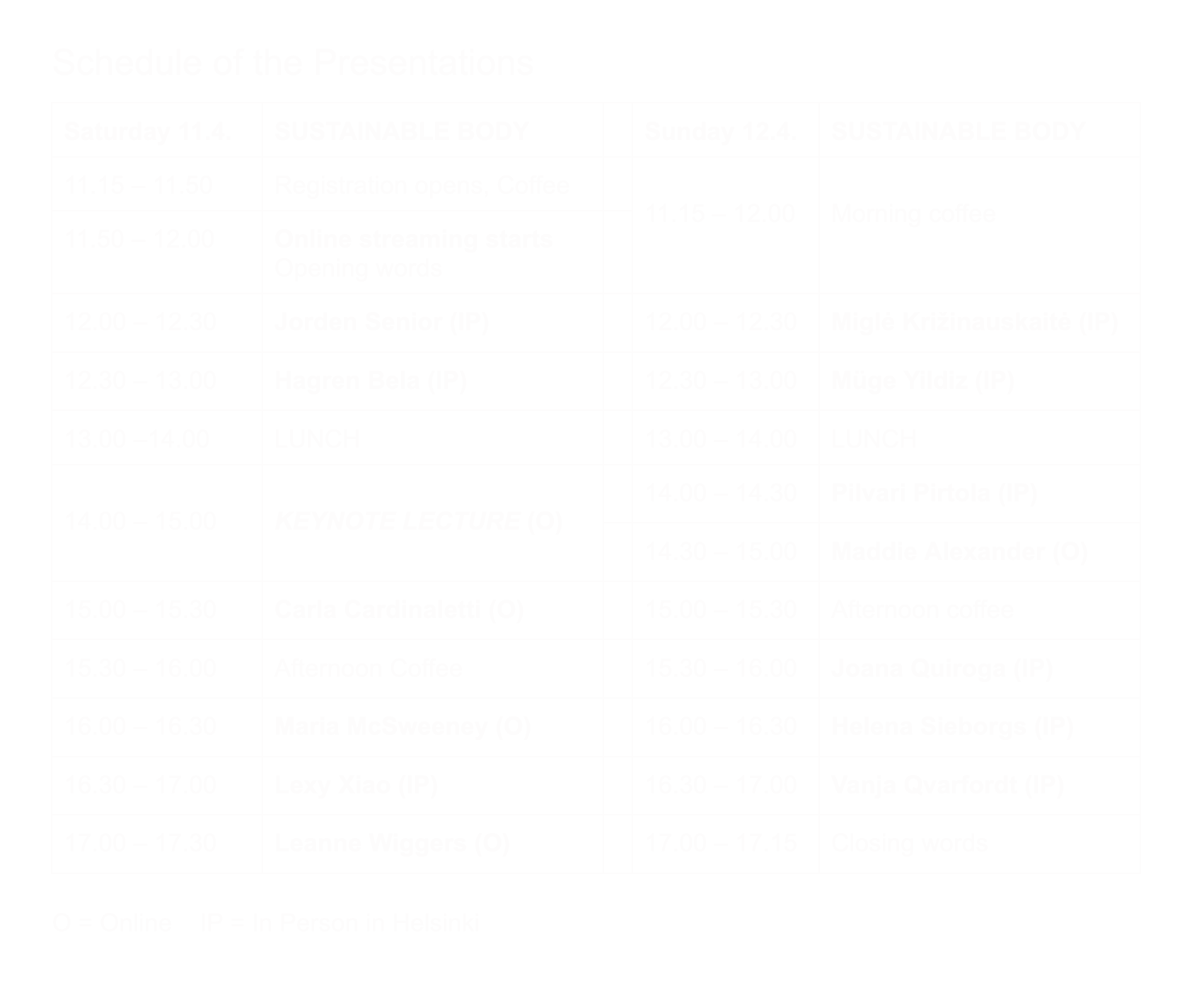
When: 11.-12.4.2026 at 12.00–17.00 (12–5pm), registration starts at 11.15 on 11.4. All the times are Helsinki time (Eastern European, UTC+2 and in April the European summer time UTC+3).
Where: Both online and in the Process Space of the Finnish Museum of Photography, Tallberginkatu 1 G, 00180 Helsinki, Finland. The museum is situated in the cultural centre Cable Factory.
Tickets & Prices
Full price participant in person at Helsinki, Finland 100€ (includes coffees/teas and lunches)
Student / Independent Researcher in person at Helsinki 50€ (includes coffees/teas and lunches)
Online participation 40€ (the link is personal and will be sent in the week prior to the symposium)
Contact and questions
Katri Krohn Lassila, katri.krohnlassila(at)gmail.com
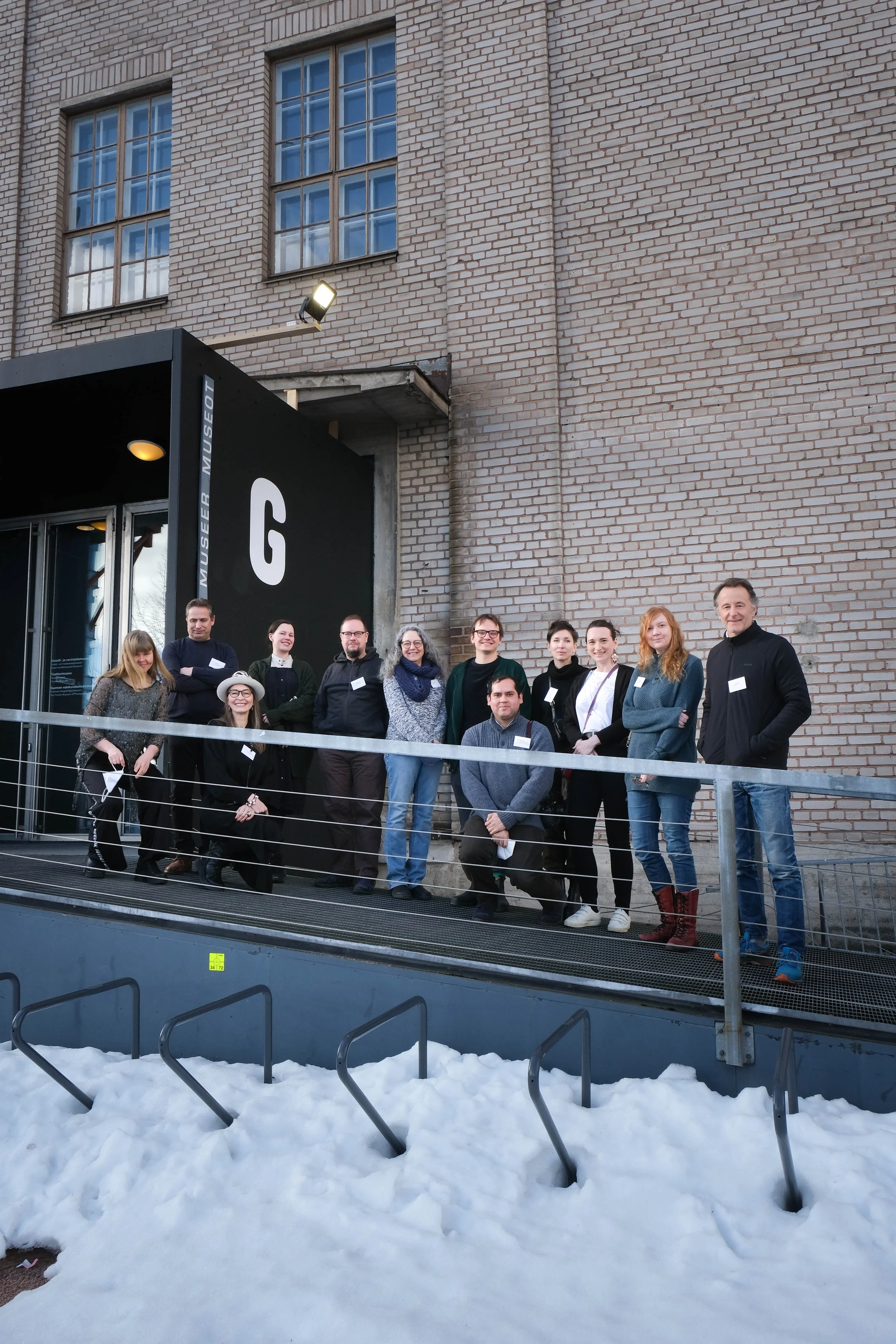
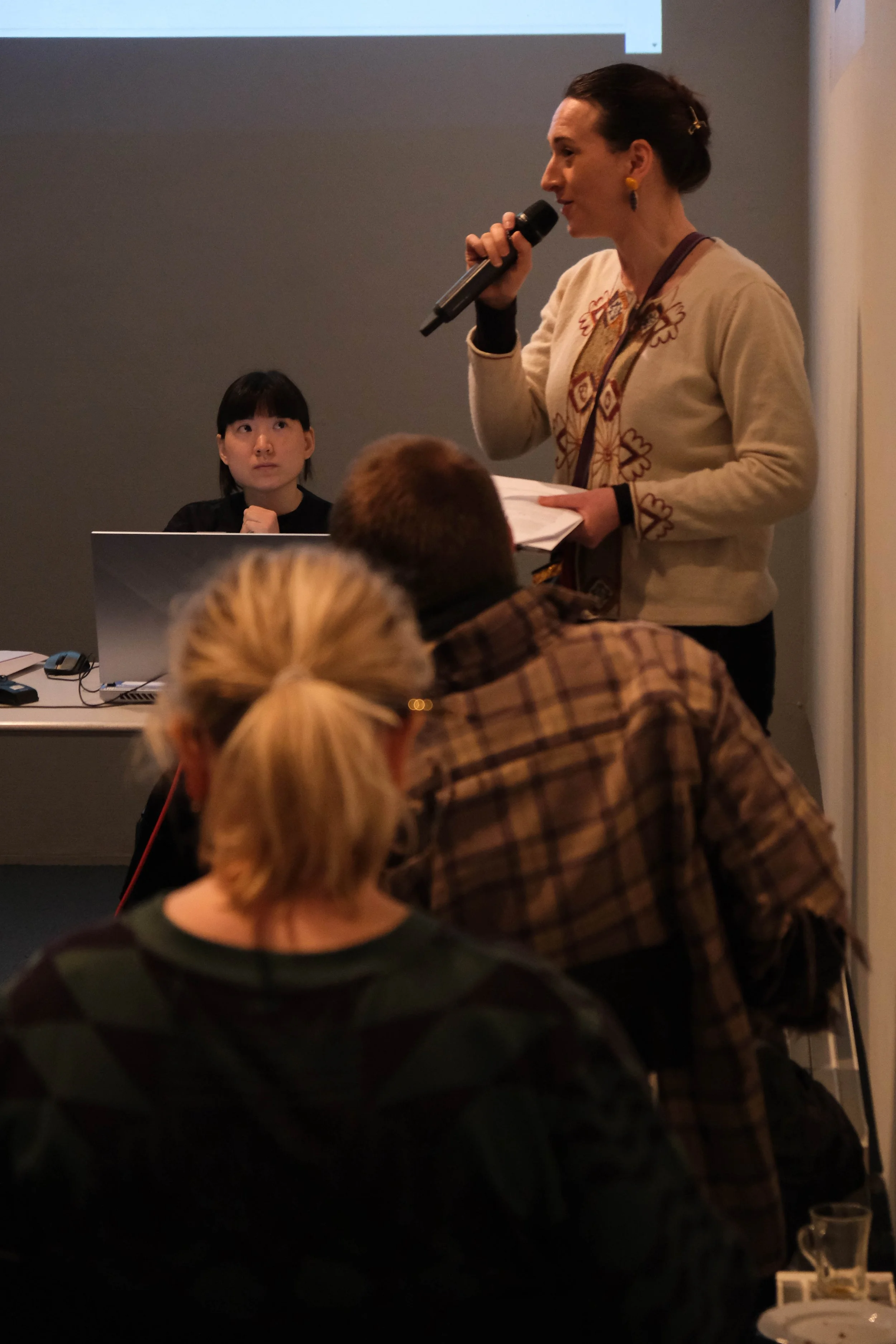
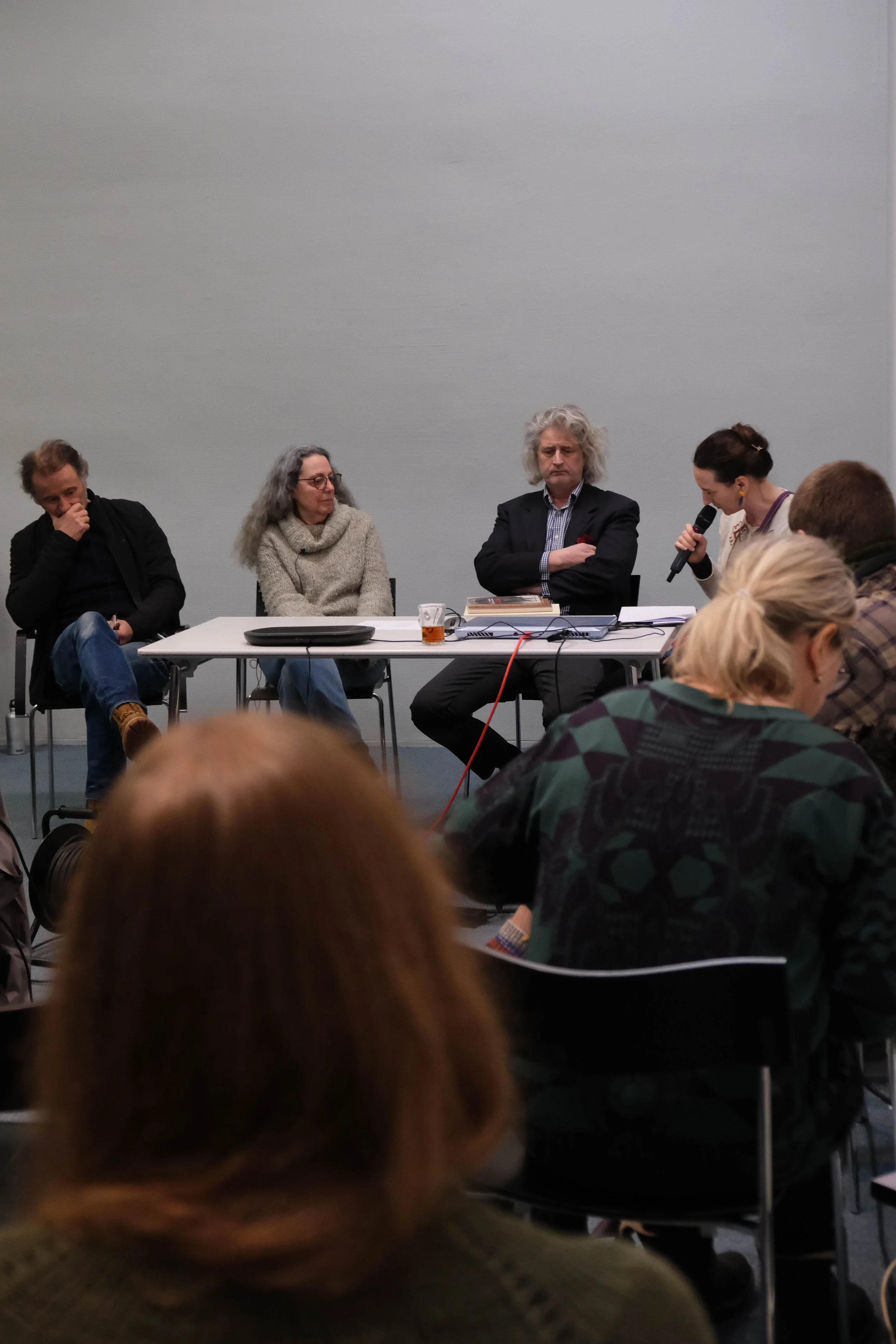
Symposium for Artistic Research in Analog Photography, 2022, Finnish Museum of Photography